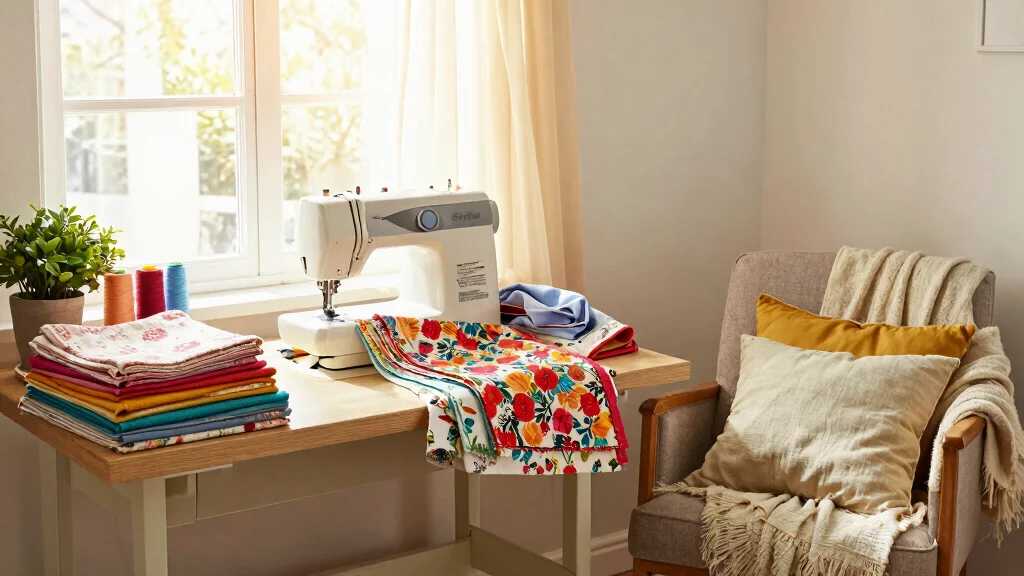
Pillows have a way of transforming a room, giving it character and comfort. With the desire to spruce up your living space, you might find yourself craving fun and creative DIY projects. That’s why I put together this post! It’s all about sewing pillows that not only add flair to your home decor but also allow you to express your creative side. Whether you’re looking to upcycle materials or create something completely new, there are pillow projects out there for everyone.
If you’re someone who loves home decor, sewing, or just getting crafty, this collection is for you. It doesn’t matter if you’re a beginner or a seasoned pro; you’ll find ideas that suit your skill level and style. I’ve pulled together 12 distinct pillow sewing projects that are eco-friendly, stylish, and perfect for every room in your home. From upcycled denim pillows to personalized photo cushions, there’s something that will catch your eye and inspire you to get sewing.
Get ready to roll up your sleeves and dive into these fun DIY pillow projects! You’ll learn various sewing techniques while creating beautiful decorative cushions that enhance any space. Plus, you’ll be left with a sense of accomplishment and a stylish home that reflects your unique personality.
Key Takeaways
– Explore a variety of pillow sewing projects suitable for all skill levels, from beginners to advanced sewists.
– Discover eco-friendly options like upcycled denim pillows that make use of old materials while being stylish.
– Learn about different sewing techniques, such as piping and patchwork, to elevate your pillow-making skills.
– Find seasonal and reversible pillow ideas for versatile decor that can change with the seasons.
– Get inspired with personalized projects like photo pillows, making your home even more unique and personal.
1. Upcycled Denim Pillow
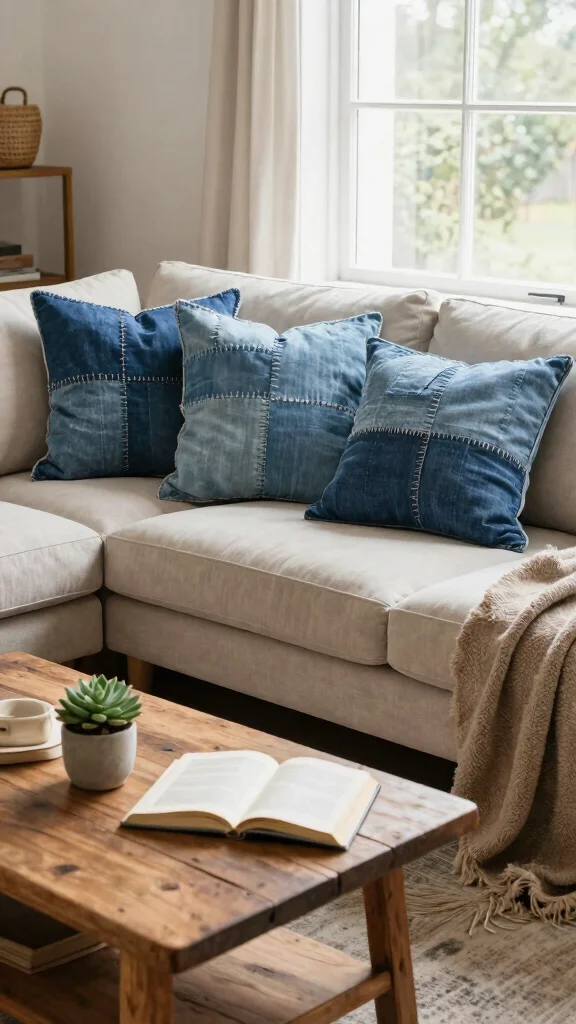
Transform your old jeans into a chic upcycled denim pillow that adds character to your space. This creative project not only reduces waste but also infuses your home with a touch of rustic charm. By cutting denim into various shapes and patching them together, you can showcase different shades and textures for a unique look. Imagine how inviting a pillow like this would feel on your sofa or bed, making it a perfect conversation starter.
To bring this idea to life, consider these practical tips:
– Use a heavy-duty needle and thread for durability.
– Add embellishments like vintage buttons or lace for a personal touch.
– Fill your pillow with eco-friendly stuffing, such as recycled cotton.
These pillows not only brighten your living area but also tell a story about sustainability and style.
Difficulty Rating & Requirements
Overall Difficulty Rating: Medium
The pillow sewing projects listed in this guide vary in difficulty. Most designs are suitable for those with some basic sewing experience, making them great for hobbyists and DIY enthusiasts. If you’re a complete beginner, projects like the Simple Envelope Pillow Cover or the Upcycled Denim Pillow are excellent starting points. These projects allow you to build confidence while creating beautiful pillows to sew.
Time Estimate:
⏱ Estimated time: 3-5 hours depending on the project. Here’s a breakdown of time for major phases:
– Planning & Material Gathering: 1-2 hours
– Sewing & Assembly: 2-3 hours
– Finishing Touches: 30 minutes
This time can vary based on your skill level and the complexity of the pillow design.
Skill Requirements:
– Required skills: Basic sewing, measuring, cutting fabric, and using a sewing machine.
– Beginner-friendly: Yes! Many projects offer tutorials that guide you step-by-step, making them accessible for all. You’ll learn valuable techniques along the way.
– Skills that can be learned include basic sewing techniques and fabric handling, while more advanced skills, such as piping or quilting, may require some prior experience.
Tools & Materials Needed:
🧰 Essential items checklist:
– Sewing machine (Required)
– Fabric (Required – choose eco-friendly options)
– Thread (Required)
– Scissors (Required)
– Pins or clips (Required)
– Measuring tape (Required)
– Iron (Optional – for better finishes)
– Stuffing or pillow inserts (Required for stuffed pillows)
These materials are usually easy to find and can fit within a reasonable budget, especially if you choose to upcycle materials.
Step-by-Step Overview:
1. Planning & Preparation (1-2 hours): Choose your pillow project and gather materials. Measure the fabric according to your design.
2. Cutting Fabric (30 minutes): Carefully cut your fabric pieces. Make sure to follow your pattern to ensure a good fit.
3. Sewing & Assembly (1-2 hours): Start sewing according to the instructions. Attach any embellishments, like piping or tags, as needed.
4. Finishing Touches (30 minutes): Turn your pillow right side out, stuff it if necessary, and sew up any openings. Iron if required for a polished look.
5. Final Review (15 minutes): Check for any loose threads or unfinished edges and make any final adjustments.
Professional vs DIY: Rough cost comparison and when to hire help:
Hiring a professional to create custom pillows can cost anywhere from $50 to $200 each, depending on the fabric and design. DIY projects often range from $10 to $50, plus the time you invest. If you’re looking to save money and enjoy a creative outlet, tackling these pillow projects yourself is a fantastic option. However, if you want a specific design or lack time, hiring a professional might be the better choice. With a little patience and practice, you can create stunning pillows that reflect your style and personality!
Upcycled Denim Pillow
Editor’s Choice
Coats & Clark Inc. N576 Denim Thread for Jeans, 250-Yard, Blue
 Amazon$6.15
Brother Sewing Machine, XM2701, Lightweight Machine with 27 Stitches, 6 …
Amazon$149.00
LIVINGO Premium Tailor Scissors Heavy Duty Multi-Purpose Titanium Coatin…
Amazon$11.89Recommended Products

Product Type : Yarn
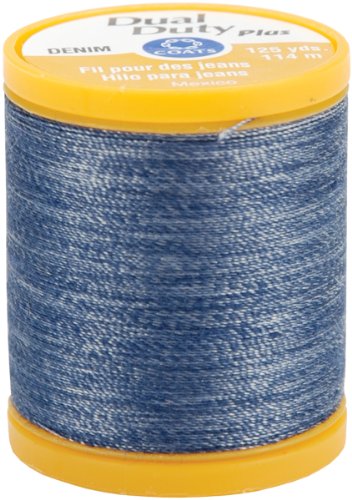
Dual Duty Plus Denim Thread for Jeans in jeans blue
2. Botanical Print Cushion
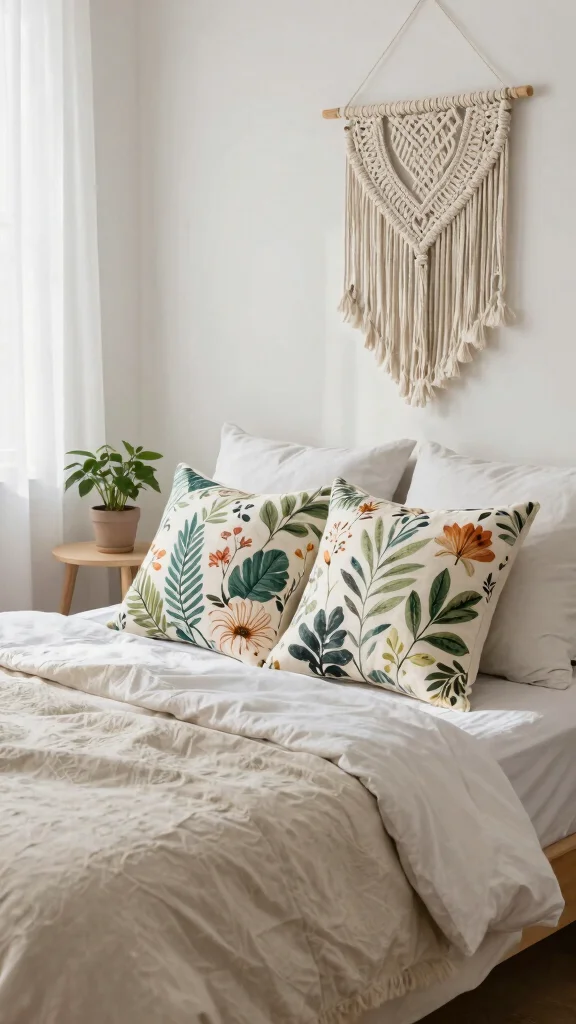
Invite nature indoors with a stunning botanical print cushion that brings a fresh vibe to any room. This project celebrates the beauty of organic fabrics and eye-catching floral patterns, making it a stylish addition to your decor. Pairing vibrant designs with solid colors allows the prints to shine, creating an inviting atmosphere.
To create your own botanical cushion, follow these tips:
– Cut your fabric to size, ensuring you leave seam allowances.
– Incorporate an invisible zipper for easy cleaning.
– Consider a contrasting eco-friendly fabric for the backing to enhance visual interest.
These cushions are perfect for brightening your bedroom or living room, connecting you with the joys of nature.
Botanical Print Cushion
Editor’s Choice

Boao 3 Pieces 36 x 62 Inch Wide Vintage Floral Cotton Fabric Rose Flower…
Amazon$21.99Recommended Products

Exquisite Embroidered Design: The front showcases vibrant animal and floral patterns brought to life through intricate embroidery. This technique not only resists fading but also adds a unique three-dimensional texture, enhancing the artistic charm and boho-inspired aesthetic of your home decor

EACH PACK CONTAINS: 20 pieces of #3 nylon zippers

3. Knotted Fringe Pillow
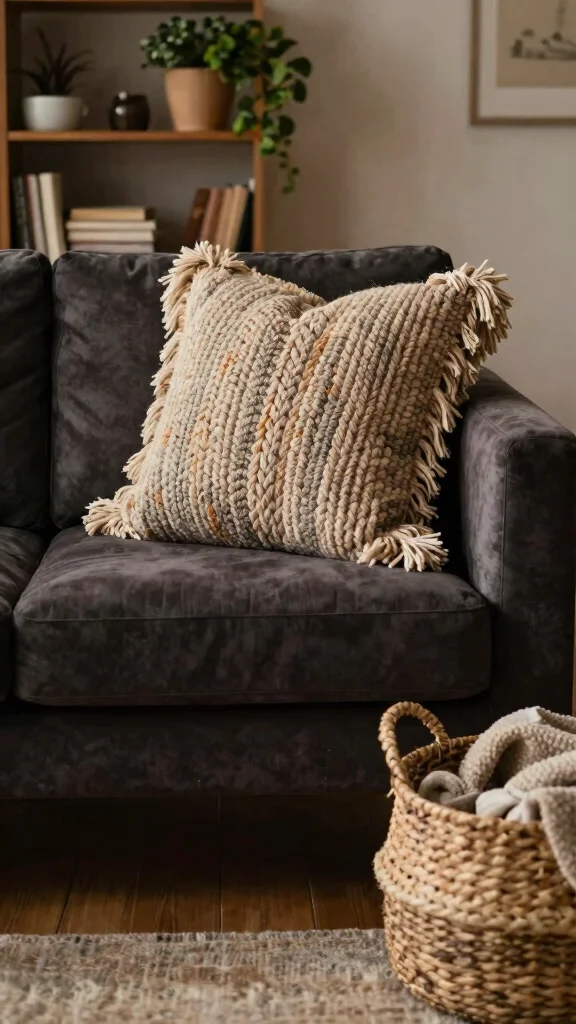
Add a bohemian flair to your home with a knotted fringe pillow that exudes style and comfort. This project is ideal for intermediate sewists looking to explore fun textures and unique designs. The layered fringe not only enhances the visual appeal but also invites touch, making it an irresistible accent piece.
To craft your knotted fringe pillow, consider these steps:
– Start with a solid fabric for the base and cut long strips for the fringe.
– Attach the fringe to the pillow edges for a dynamic look.
– Experiment with different knots and braiding techniques for added interest.
This pillow can effortlessly become a focal point on your sofa or bed, blending beauty with tactile enjoyment.
Knotted Fringe Pillow
Editor’s Choice
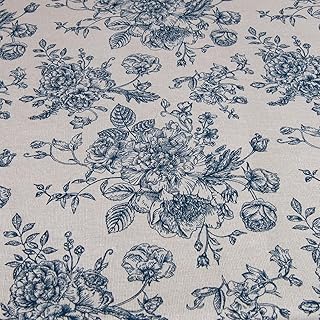
Linen Fabric by The Yard – Upholstery Fabric by The Yards Floral Pattern…
Amazon$14.99
Sewing Project Kits Floral Pattern Sewing Kit with 130PCS Sewing Supplie…
Amazon$9.99
Cindy and Wendy Lightweight Soft Leaf Lace Fringes Scarf Bridal Veils sh…
Amazon$9.55Recommended Products

【Heavy Duty Sewing Kit】- This comprehensive sewing kit includes 32 leather sewing needles, 10 leather sewing threads (30 m/color), a needle bottle, an awl, a tape measure, scissors, and a sewing thimble.

The most XL spools of thread in sewing kit: This sewing kit contains 38 high quality XL thread spools. The beautiful vibrant colors are ideal for your daily needs. 43 inches excellent assorted threads of more longer threads,thick threads, not easy to break, reliable for it!

Complete Upholstery Repair Kit: The sewing kit includes 8 colors of sewing thread, 32 pcs needles, 2 pcs awls, 2 pcs seam rippers, thimble, ruler, needle threader, needle bottle, scissors and storage bag, the leather repair kit contains all the basic sewing necessities, you can use them to sew easily
4. Simple Envelope Pillow Cover

Create a simple envelope pillow cover that’s perfect for beginners and requires minimal sewing skills. This versatile project allows you to play with different patterns and colors while using natural fabrics to keep it eco-friendly. The envelope design makes it easy to remove and wash, adding functionality to your decor.
To make your envelope pillow cover, follow these steps:
– Cut two rectangles slightly larger than your pillow insert.
– Overlap the pieces at the back to form the envelope effect.
– Finish the edges with a zigzag stitch to prevent fraying.
This pillow cover can fit seamlessly into any room, bringing a fresh touch with seasonal fabric options.
Simple Envelope Pillow Cover
Editor’s Choice

Sewing Machine Portable mini Electric Sewing Machine for beginners 12 Bu…
Amazon$49.99
Boao 3 Pieces 3 Yards 62 Inch Wide Floral Cotton Fabric Rose Pattern Flo…
Amazon$22.99
Dr. Scholl’s Walk Longer Insoles – Comfortable Plush Foam Cushioning Ins…
Amazon$14.97Recommended Products

⚠️ OPTIONAL PILLOW INSERT : Since most customers already have a pillow insert in their homes, the product is a personalized pillow cover only. However, an optional insert that fits the cover perfectly is available for adding to your order while customizing the pillowcase.

Personalized with Your Photo – Print any picture you love, a family photo, a pet, a couple snapshot, or a special moment, onto a custom throw pillow that adds a personal touch to any room.

HIGH-QUALITY MATERIAL: Our personalized custom photo pillows are made of high-quality short plush, 100% filled with PP cotton, which is skin-friendly and durable. Soft, smooth and comfortable to touch, not easy to fade, anti-pollution, and easy to clean
5. Quilted Throw Pillow
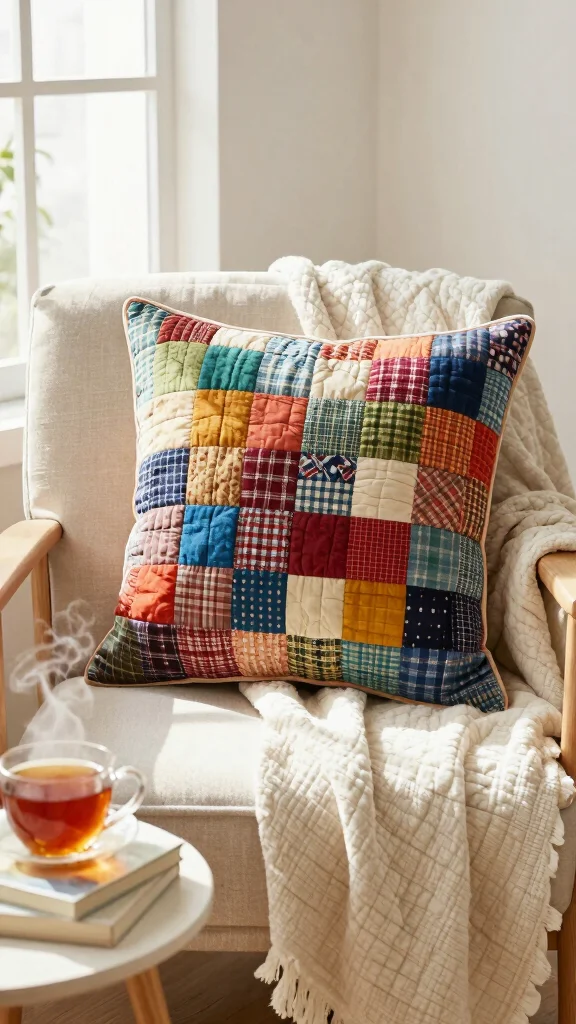
Explore your creativity with a quilted throw pillow that combines color and texture beautifully. This DIY project allows you to use scrap fabric, promoting sustainability while adding warmth to your decor. Quilting not only enhances comfort but also showcases your artistic flair through intricate designs.
To start your quilting adventure, consider these tips:
– Cut squares or triangles of fabric and arrange them into a pleasing pattern.
– Sew the pieces together, then quilt the layers for added durability.
– Use natural batting for filling to enhance coziness.
A quilted throw pillow adds dimension to your decor and reflects your unique style.
Quilted Throw Pillow
Editor’s Choice

Density-upgraded 24″ x 36″ Large Self Healing Sewing Mat, Idemeet Rotary…
Amazon$36.99
Boao 3 Pieces 3 Yards 62 Inch Wide Floral Cotton Fabric Rose Pattern Flo…
Amazon$22.99
Brother Sewing Machine, XM2701, Lightweight Machine with 27 Stitches, 6 …
Amazon$149.00Recommended Products

Material:Cotton Fabrics, Stuffed With High Quality Cotton.


Package includes: 1 pillow cover. (Please Note: PILLOW COVER ONLY, NO CUSHION INSERT)
6. Hand-Stitched Pillows
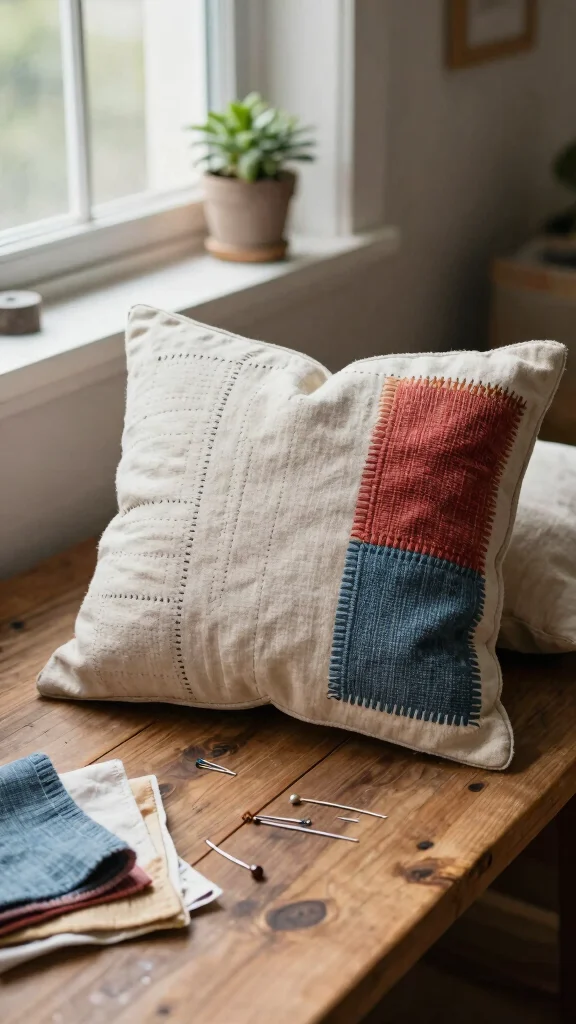
Discover the charm of hand-stitched pillows that add a personal touch to your home. This technique allows you to slow down and focus on craftsmanship, making it a perfect project for enhancing your sewing skills. Plus, it’s a great way to use up fabric scraps from previous projects.
To create your hand-stitched pillow, follow these steps:
– Choose your favorite fabric and cut it to size.
– Experiment with stitching techniques like running stitches or cross-stitching along the edges.
– Fill it with eco-friendly stuffing or leftover fabric scraps for a unique feel.
Hand-stitched pillows radiate warmth, perfect for anyone who appreciates handmade artistry.
You might also like

Recommended Products

Includes sewing templates and easy instructions to sew (8) different types of decorative pillows.

QUALITY: Lightweight to medium weight denim fabric (8 oz or 270 GSM) with 70% cotton, 28% polyester, and 2% spandex blend for slight horizontal stretch and durability.

Unique Design: The fabric is carefully designed with floral patterns, which breaks the monotonous visual feeling of traditional denim and adds a romantic and soft atmosphere to the fabric, which can meet your pursuit of personalization and fashion sense
Hand-Stitched Pillows
Editor’s Choice

Coquimbo Sewing Kit Gifts for Mom Grandma Women Men Teen Girls Boys Begi…
Amazon$6.98
Friendship Bracelet String 50 Skeins Rainbow Color Embroidery Floss Cros…
Amazon$5.99
Fiskars RazorEdge Fabric Scissors, Heavy Duty Fabric Shears, Ultra-Sharp…
Amazon$16.97Recommended Products

Premium Nylon Material & Smooth Function Crafted from high-quality nylon coil, these invisible zippers are both durable and flexible. They feature a smooth-gliding pull for effortless opening and closing, ensuring reliable performance in your sewing projects.
HYPOALLERGENIC PROTECTION: This hypoallergenic pillow case is crafted from tight weave 100% cotton, minimizing exposure to dust and allergens for a more comfortable sleep environment

Zippers Bulk: Package comes with 120 pieces of zippers in 3 different lengths and 20 colors, a sufficient amount to meet your needs. Great for sewing craft projects like making bags, pouches, pillow covers and more
7. Pillow with Piping
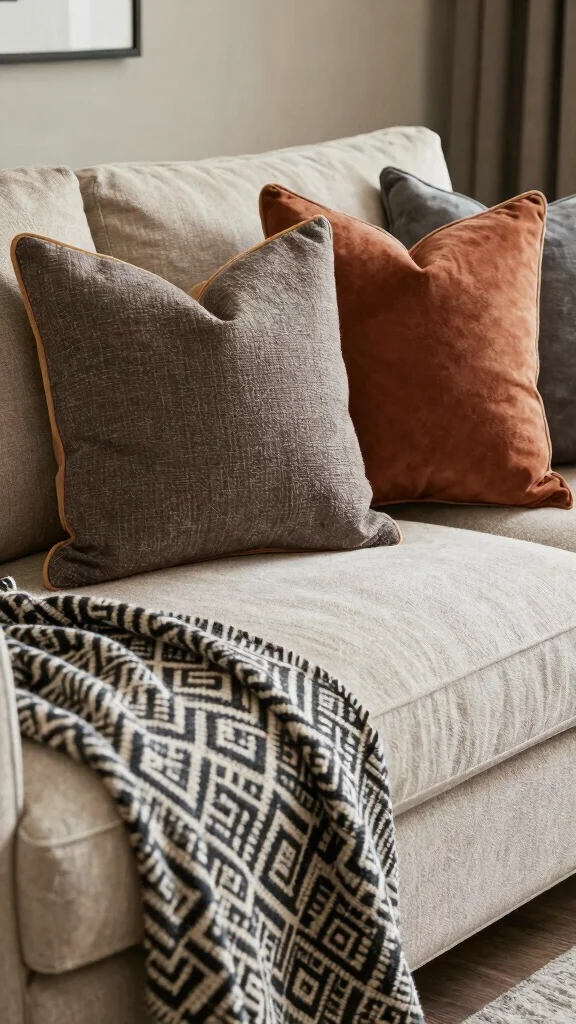
Elevate your pillow game with piping that adds a polished look to your decor. This project is ideal for intermediate sewists looking to refine their skills while creating standout pieces. The piping detail not only enhances the overall aesthetic but also gives your pillows a professional finish.
To incorporate piping, consider these steps:
– Cut bias strips from contrasting fabric for the piping.
– Sew them into the seams of the pillow cover for a neat finish.
– Ensure the piping is aligned properly to avoid puckering.
Pillows with piping add elegance to any room, making them perfect accents for your home.
Pillow with Piping
Editor’s Choice

Jeimier 5 Sizes Bias Tape Makers, Upgraded Bias Binding Tape Making Tool…
Amazon$4.99
Piping Sewing Machine Presser Foot for All Low Shank Snap, On Brother, B…
Amazon$5.99Recommended Products

Perfect Heavy Duty Sewing Kit: This fully-packed sewing kit contains all the necessary tools to sew for most of your sewing needs. You will get: 25* Hand Sewing Needles, 12* Upholstery Thread, 1* Inch Ruler, 1* Scissors, 1* Thimble, 3* Awl Tool, 2* Seam Ripper, 1* Threader.

【Everything You Need to Sew】This sewing kit contains all the necessary tools needed to perform basic repairs and solves your daily sewing needs at home or while traveling. Our needle and thread kit comes with a variety of colors of thread, various sewing needles, Scissors, tape measure, needle threader, thread remover, Seam ripper, thimble, safety pins,button etc.

Due to a change in zipper style, the received product may differ slightly from the image. You may receive either the version depicted in the image or the one shown in the video
8. Patchwork Pillows

Get creative with patchwork pillows that turn scrap fabric into delightful decor. This project is perfect for eco-conscious crafters, allowing you to transform leftover pieces into beautiful designs. Mixing various textures and patterns can add a whimsical touch to your space.
To create patchwork pillows, follow these steps:
– Cut fabric scraps into uniform squares or rectangles.
– Arrange them in a fun pattern before sewing them together.
– Keep seams neat for a polished look.
Patchwork pillows showcase your personality and commitment to sustainable crafting, making your space truly unique.
❝Did you know patchwork pillows can use up to 90% of fabric scraps? Turning leftovers into unique designs keeps waste low and style high. Eco conscious crafters can transform scraps into cozy, durable pillows to sew.❞
Patchwork Pillows
Editor’s Choice

Boao 3 Pieces 3 Yards 62 Inch Wide Floral Cotton Fabric Rose Pattern Flo…
Amazon$22.99
Brother Sewing Machine, XM2701, Lightweight Machine with 27 Stitches, 6 …
Amazon$149.00
Amazon Basics Multipurpose Stainless Steel Scissors for Office, Crafts, …
Amazon$7.55Recommended Products


Design By Your Own: To get a personalized pillowcase is easy, just choose a color and size for your specific need, click "Customize Now" to upload your design photo text or logo and place the order, we will do the remaining work for your customization

Personalized Pillow cover: Customized pillowcase design by yourself, Customized cushion case with any photo.Pillowcase adopts high-definition printing technology.
9. Knit Pillow Covers
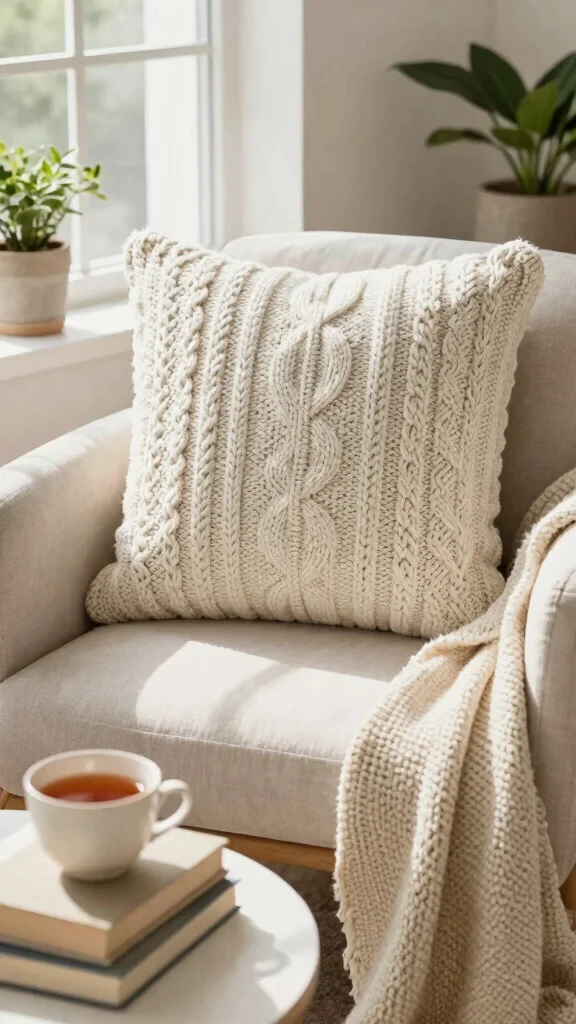
Knit pillow covers are a cozy and eco-friendly project perfect for knitters of all levels. This craft allows for personal expression and creativity while ensuring a warm atmosphere in your home. A handmade knit cover adds a soft touch, making your space feel inviting.
To create your knit pillow cover, follow these steps:
– Select a soft, natural yarn for a comfortable feel.
– Follow a simple pattern or create your own with unique stitch variations.
– Add buttons or a tie closure for easy washing.
A knit pillow cover enhances your decor with warmth and texture, making your home feel welcoming.
Knit Pillow Covers
Editor’s Choice

Cardigan Knitting Pattern: 20 Easy and Elegant Patterns for Knitters of …
Amazon$16.34
Yarniss Scarf Knitting Kits for Beginner with Video Tutorial,Knitting Lo…
Amazon$24.99
36PCS Bamboo Knitting Needles Set, BetyBedy Single Pointed Knitting Need…
Amazon$8.25Recommended Products


【Reversible design】Unique patchwork patterns, with classic quilting, elegant, charming and unique. The reverse side is paired with a coordinating green stripe,simplicity and elegance. Made to enhance decor and give you a comfortable and good mood.

Pure Cotton Life: The quilt set consists of three layers: face,fill,and back.Selecting high-quality high-density fabrics from natural cotton, cotton fibers have their own unique temperature management function, which provides more comfortable temperature locking, soft and skin friendly without stimulation. High quality cotton fabric with good moisture absorption and breathability, delicate and soft touch, caring for your warm sleep. this quilts queen size is suitable for all seasons.
10. Seasonal Reversible Pillows

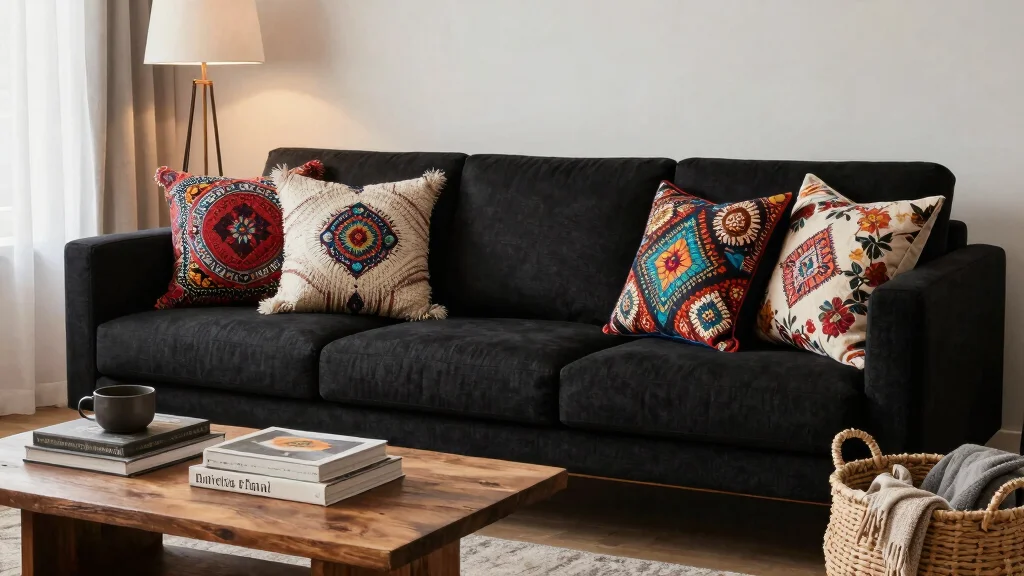
Embrace versatility with seasonal reversible pillows that keep your decor fresh year-round. This fun project is perfect for sewists who enjoy experimenting with colors and themes, allowing you to easily switch styles with the changing seasons. Having two designs in one pillow adds excitement to your home decor.
To make reversible pillows, consider these steps:
– Choose two complementary fabrics for each side.
– Sew them together, leaving an opening for the pillow insert.
– Add a hidden zipper or buttons for easy swapping.
These pillows offer a simple way to refresh your decor, making your home vibrant and playful.
Did you know that seasonal reversible pillows offer 2 designs in 1? Switch moods in seconds and keep your decor fresh all year long—no extra purchases required.
You Might Also Like

Seasonal Reversible Pillows
Editor’s Choice

anezus Self Healing Sewing Mat, 12inch x 18inch Rotary Cutting Mat Doubl…
Amazon$8.99
Brother Sewing Machine, XM2701, Lightweight Machine with 27 Stitches, 6 …
Amazon$149.00
Sewing Project Kits Floral Pattern Sewing Kit with 130PCS Sewing Supplie…
Amazon$9.9911. Faux Fur Pillow

Indulge in luxury with faux fur pillows that bring warmth and style to your space. This project captures the essence of eco-friendly decor while ensuring a soft, cozy touch. Faux fur pillows can transform any room into a plush retreat, perfect for colder months.
To create your faux fur pillow, follow these steps:
– Cut your fabric to size, keeping the nap direction in mind.
– Use a soft lining fabric for the back to enhance comfort.
– Include a hidden zipper for a sleek finish.
Faux fur pillows elevate your decor with sophistication and warmth, making them perfect accents for your living space.
Faux Fur Pillow
Editor’s Choice

Silk Pillowcase for Hair and Skin, Mulberry Silk Pillow Cases Standard S…
Amazon$11.95
Ambesonne African Fabric by The Yard, Woman of Color Carrying Water Vase…
Amazon$26.99
EOVEA Shaggy Faux Fur Fabric by The Yard – 60” Wide | Fluffy, Soft F…
Amazon$23.8012. Personalized Photo Pillows

Celebrate your cherished memories with personalized photo pillows that add a unique touch to your decor. This project is perfect for all skill levels, allowing you to showcase family pictures or special moments in a creative way. A photo pillow can serve as both a functional item and a heartfelt decoration.
To create your photo pillow, follow these steps:
– Choose a high-quality image to print on fabric using transfer paper.
– Sew a simple pillow cover to encase the printed fabric securely.
– Reinforce seams for durability to ensure it lasts.
Personalized photo pillows are a delightful way to celebrate life’s special moments, bringing warmth and joy into your home.
Fun fact: A 12×18 photo print on fabric can turn into a cozy pillow in under 30 minutes with simple sewing—perfect for gifting in 1 weekend. It’s eco-friendly, since you reuse fabric scraps and create a lasting keepsake rather than disposable decor.
Personalized Photo Pillows
Editor’s Choice
Brother CS7000X Computerized Sewing and Quilting Machine, 70 Built-in St…
Amazon$279.99
TransOurDream Upgraded Iron on Heat Transfer Paper for T Shirts (8.5×11’…
Amazon$12.97
Utopia Bedding 18×18 Pillow Inserts, Set of 2, White – Indoor Decorati…
Amazon$16.89Conclusion

Sewing your own eco-friendly pillows isn’t just about making home decor; it’s a creative journey that helps you express personal style while contributing positively to the planet. From upcycling old fabrics to exploring new techniques, these projects allow you to customize your space and create unique pieces that tell your story. Embrace your inner crafter and dive into these pillow projects to enhance your home with love, style, and sustainability!
Note: We aim to provide accurate product links, but some may occasionally expire or become unavailable. If this happens, please search directly on Amazon for the product or a suitable alternative.
This post contains Amazon affiliate links, meaning we may earn a small commission if you purchase through our links, at no extra cost to you.
Frequently Asked Questions
What are the best eco-friendly fabrics and fillings for pillows to sew?
Choosing eco-friendly fabrics and fillings sets the tone for any pillow sewing project. For fabric, try organic cotton, linen, hemp, or bamboo blends, and keep an eye out for upcycled or deadstock textiles to reduce waste. For fillings, natural options like kapok or wool batting are great, or choose recycled polyester fill if you need a durable, machine-washable option. Always pre-wash fabrics and cut with accurate seam allowances, then test a small sample before committing to a full pillow to ensure shrinkage and feel are right.
These choices align with DIY pillow projects and home decor sewing ideas.
How can beginners start with beginner pillow patterns and create decorative cushions easily?
For beginners, start with simple shapes like 16×16 or 18×18 squares or rectangles. Look for patterns labeled beginner pillow patterns and follow decorative cushion tutorials that use a basic envelope back or a simple zipper. Practice with scrap fabric first, set a consistent seam allowance (usually 1/4″ to 1/2″), cut accurate pieces, sew three sides, turn right-side-out, stuff evenly, and close the final edge with a neat topstitch. Once comfortable, try adding a decorative trim or appliqué from DIY pillow projects in your space.
Which sewing techniques for pillows are essential to master early on?
Core techniques to master include straight seams with a consistent seam allowance (1/4″ or 1/2″), building clean box corners for depth, turning and pressing right-side-out, and choosing a closure (envelope back or a simple zipper). Finish edges with a zigzag or overlock to prevent fraying, and practice clipping corners for crisp points. Once comfortable, you can experiment with sewing techniques for pillows like piping, flange edges, or hidden zippers.
How can I personalize and style DIY pillow projects to fit different rooms on a budget?
Create a cohesive look by sticking to a small color story (two to three colors) and mixing textures like linen, organic cotton, and a natural weave. Use removable covers so you can switch up styles without buying new inserts, and repurpose fabric from old curtains or clothing to keep costs down—an eco-friendly approach to DIY pillow projects and home decor sewing ideas. Group cushions in threes for balance, vary sizes (18×18, 20×20, 12×24), and rotate covers seasonally to refresh rooms on a budget.
How do I care for and maintain decorative cushions to keep them looking fresh?
Most removable covers can be machine washed on cold and air-dried, but always check the fabric care label. If a cover isn’t washable, spot clean gently and let it dry fully before reattaching. For natural fillings, fluff inserts regularly and air them out to prevent odors. Rotate covers to avoid uneven fading from sun exposure, and store seasonal cushions properly when not in use. This keeps your eco-friendly pillow sewing projects looking crisp and fresh.
Related Topics
home decor
eco-friendly sewing
DIY pillow projects
beginner pillow patterns
decorative cushions
sewing techniques
upcycled materials
interior design
easy sewing
intermediate projects
modern pillows
seasonal decor